Science
New dinosaur species, a T. rex cousin that "would have chased us," identified from fossil found 100 years ago
A fossil discovered 100 years ago in the U.K. has been identified as a previously unknown cousin of the T. rex, and it "definitely would have chased us."
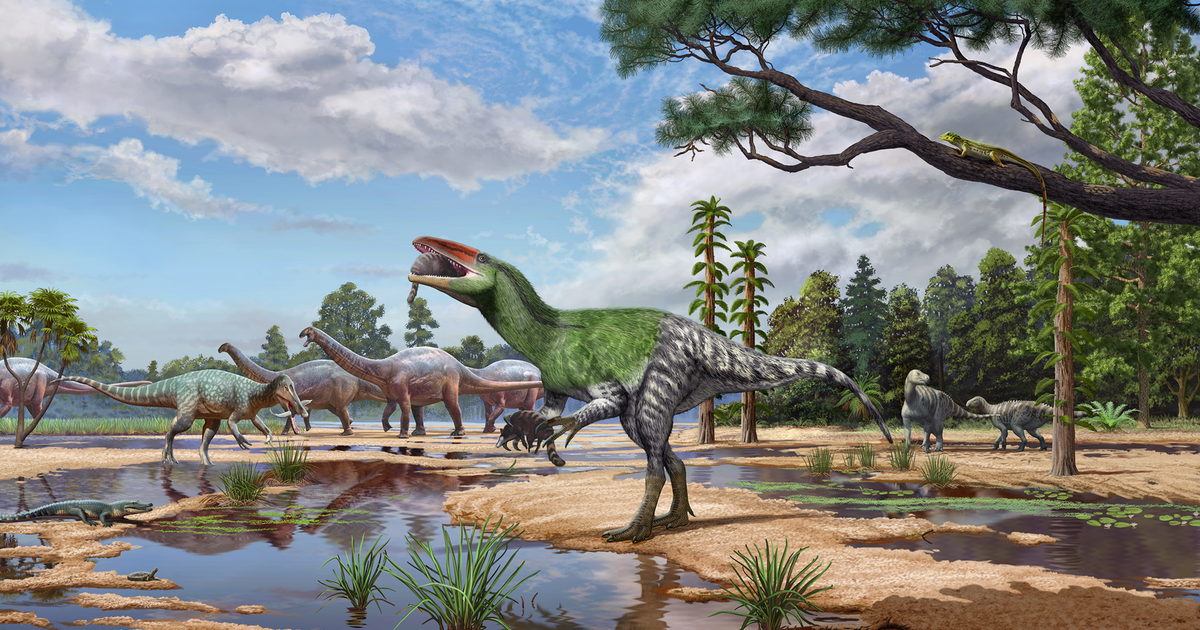
London — A previously unknown species of dinosaur — a "long-clawed predator the size of a tiger" and a cousin of the Tyrannosaurus rex — has been identified from a fossil originally found 100 years ago, but which remained hidden away in a British museum until recently.
The species has been named Invictibellatrix amberina, and it belongs to a group of two-legged carnivores known as megaraptoransaccording to an article published in the Royal Society Open Science research journal.
Megaraptorans were closely related to the group of dinosaurs T. rex originated from, the tyrannosaurs. Unlike T. rex, however, scientists say Invictibellatrix did not attack prey with its mouth, but with its long arms and giant curved claws.
Researchers believe the dinosaur would have been between 10 and 13 feet long and almost 5 feet tall. Its body would have had feathers, and it would have hunted smaller dinosaurs, lizards and mammals.
The fossil that led to the discovery sat in a drawer at the Natural History Museum in London for nearly 100 years, having first been obtained by the vaunted institution in 1924.
Dr. Cassius Morrison of University College London, the lead author of the article that announced the discovery, called it a "real mystery that the fossil was overlooked for so long."
Morrison wrote that while Invictibellatrix "was not the apex predator of its time," it would have been a formidable threat to humans if they had coexisted with the species — even "more dangerous than a T. rex."
"We would have been perfectly sized prey, about a third of their body weight," he said. "They definitely would have chased us. A T. rex would not have bothered, as we would have been too small."
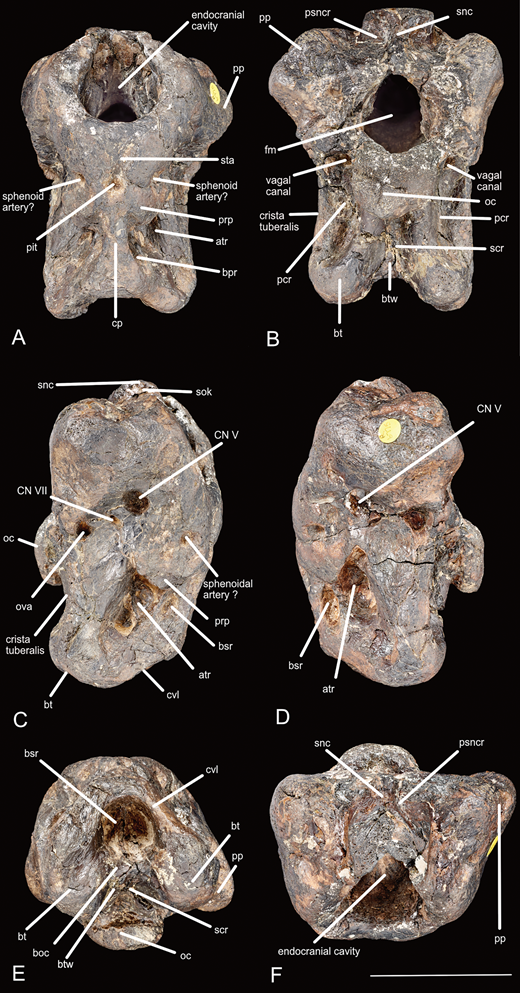
The fossil itself is a chunk of the back of a skull. It was one of 1,000 specimens originally discovered by Reginald Walter Tooley on the Isle of Wight, off the south coast of England, and it was then acquired by the Natural History Museum.
Invictibellatrix lived during the Early Cretaceous period, around 120 million years ago, and is one of the smallest and earliest known members of the megaraptoran group.
To understand Invictibellatrix, researchers first took a CT scan of the fossil to create a 3D model of that part of its skull. The results were compared with the skulls of other two-legged meat-eating dinosaurs, such as tyrannosaurs, spinosaurs and raptors. A number of unique features led researchers to conclude they had discovered a new species.
Invictibellatrix is Latin for "unconquered female warrior" and amberina refers to the amber found in the rocks where the fossil was discovered. The researchers said by naming the dinosaur Invictibellatrix, they wanted to "give hope and strength to all those who are bullied, discriminated, victimized, and oppressed that tomorrow will be theirs and not to give up in the face of such odds."
In:
Comments
No comments yet.
Related stories


More from Velnora Daily
World
Diesel at $6.29 a Gallon: Why Life in America Could Get More Expensive — and What Families Can Do About It
Rising fuel costs don't just affect drivers. They can put pressure on grocery prices, deliveries, and everyday purchases across the country.

World
TRUMP'S $5,000 ELECTION PROMISE SPARKS CONTROVERSY: A POLITICAL PAYOUT OR A STRATEGY TO KEEP POWER?
The president has tied a proposed $5,000 payment to a Republican victory in November's midterm elections. Critics are questioning the timing, the price tag and what the promise means for American voters.

What readers are saying
Readers discuss the facts, the analysis and how Science affects everyday life.
Comments 0